The actor Rupert Grint made his name through playing the character of Ron Weasley in the hugely successful film adaptations of the JK Rowling Harry Potter novels. These were released in the period 2001 to 2011. Later, he distanced himself from Rowling when she began her campaign of persecution against trans women. In 202o, Grint said: "Trans women are women. Trans men are men. We should all be entitled to live with love and without judgment.”
Now it seems that Grint is to reprise the role of Ron Weasley from 2027 in the Broadway production of Rowling's spin-off play Harry Potter and the Cursed Child. He says he is looking forward to reintegrating himself with the character. Social media commenting has focused on the betrayal of his principles. Apparently the most-used comment is "I thought you were an ally." The comment "Protect the dolls" also features.
A few months ago, in my home town of Godalming, I observed a meeting of the Town Council from the public gallery. Most of it was routine and detailed. I was there for the debate on a motion put forward by the council's two Green representatives. This was to commission the relevant council sub-committee to develop an ethical investment policy, setting out the principles on which the council would base its investments. One of the Greens drew attention to the bank that managed the council's funds. She said that the bank was publicly known as a significant financial contributor to Israeli settlement activity in the West Bank. If the council adopted an ethical investment policy, that would provide a basis for reconsidering where its funds should be held and possibly transferring them to another bank.
Councillors from other parties – notably the Conservative representative and the Liberal Democrat majority – reacted against the idea. Their main point was that they had a duty to safeguard the Council's finances, and a sound investment practice was more important than any ethical considerations. In the vote, which the Greens asked to be recorded, the Conservative councillor voted against the motion. And although the Liberal Democrat leader of the Council abstained, most of the Liberal Democrat Councillors voted against. These included one councillor who had previously been outspoken in her opposition to the Israeli oppression of the Palestinian people over a period of some years. I had previously admired her for her stance on Palestinian rights. Now I can only think of her as an indirect supporter of Israeli settler violence in the region.
In 2024, I started attending an Anglican church just a few miles from where I lived. Early in my attendance, I came out as trans to the vicar. She gave the impression of being sympathetic and understanding. This is what I expected since her church is among those listed as inclusive, in the directory maintained by Inclusive Church. At this time I was still presenting in boy mode. I had a series of discussions with the vicar over a period of some months about how I might come out to the congregation at large. She was supportive in principle, but whenever I suggested a particular date or occasion when I might turn up in female mode, she told me that the time was not right.
Despite that, I settled into the church. The vicar and the PCC asked me to attend the local service leader training course offered by the diocese. I attended the course in boy mode, but came out to the course leaders and the diocesan training coordinator. I left the course as a certified local service leader. The training coordinator wrote to all the relevant vicars encouraging them to give the course members an early opportunity to lead a service. In my next discussion with my vicar, she told me that presenting as trans in a service at her church was not compatible with leading the service from the front. She said it would distract the congregation. Her next service rota, covering a period of some months, did not include me at all.
A few months previously, I had offered to stand for election to the deanery synod, so that I could support the Inclusive side on behalf of the parish. At the time, the vicar emailed me expressing strong support. But when the Annual Meeting came round, and I submitted my nomination paper, she told me that she now opposed my standing for election. She said she wanted to use the deanery synod vacancy for another member of the congregation, not known for her views on inclusiveness, in order to lever this person on to the PCC so as to contribute to its work. The vicar had not told me of her change of mind.
This combination of betrayals affected me profoundly. I left her church shortly afterwards and was on the point of giving up religious activities altogether.
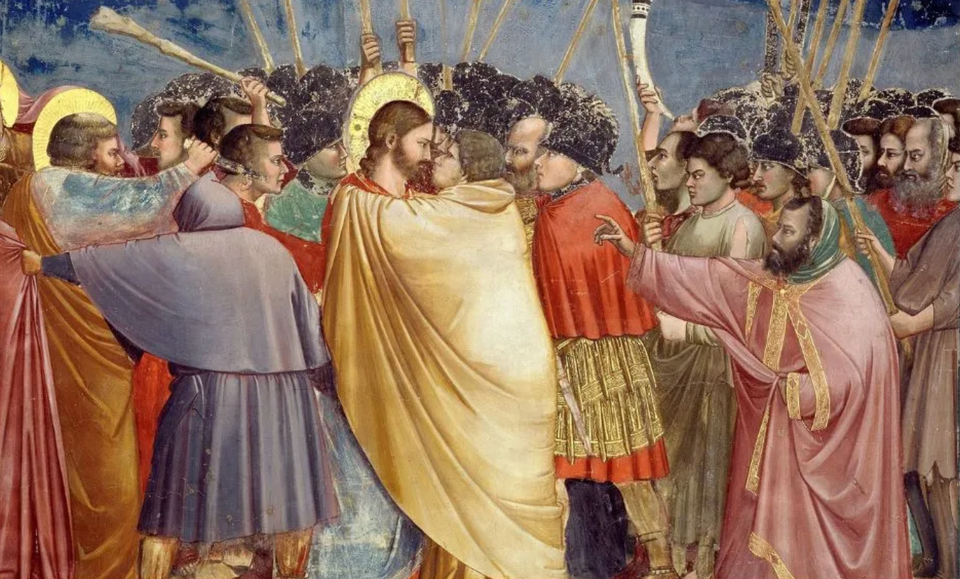
What is it about betrayal? Traitors have been reviled in history and literature. Dante's Inferno depicts hell as a series of nine circles, descending deeper into sin and punishment. The Ninth Circle – the lowest – is reserved for traitors. At its centre is Judas Iscariot, who betrayed Christ, and Brutus and Cassius, who betrayed Julius Caesar.
Integrity is important to me. I place my trust in my friends and try to act honourably towards them, hoping they will do the same to me. When my trust is betrayed, I find it almost impossible to recover. I feel like the Psalmist, who had this to say in Psalm 55:
12 If an enemy were insulting me,
I could endure it;
if a foe were rising against me,
I could hide.
13 But it is you, a man like myself,
my companion, my close friend,
14 with whom I once enjoyed sweet fellowship
at the house of God,
as we walked about
among the worshippers.
…
20 My companion attacks his friends;
he violates his covenant.
21 His talk is smooth as butter,
yet war is in his heart;
his words are more soothing than oil,
yet they are drawn swords.