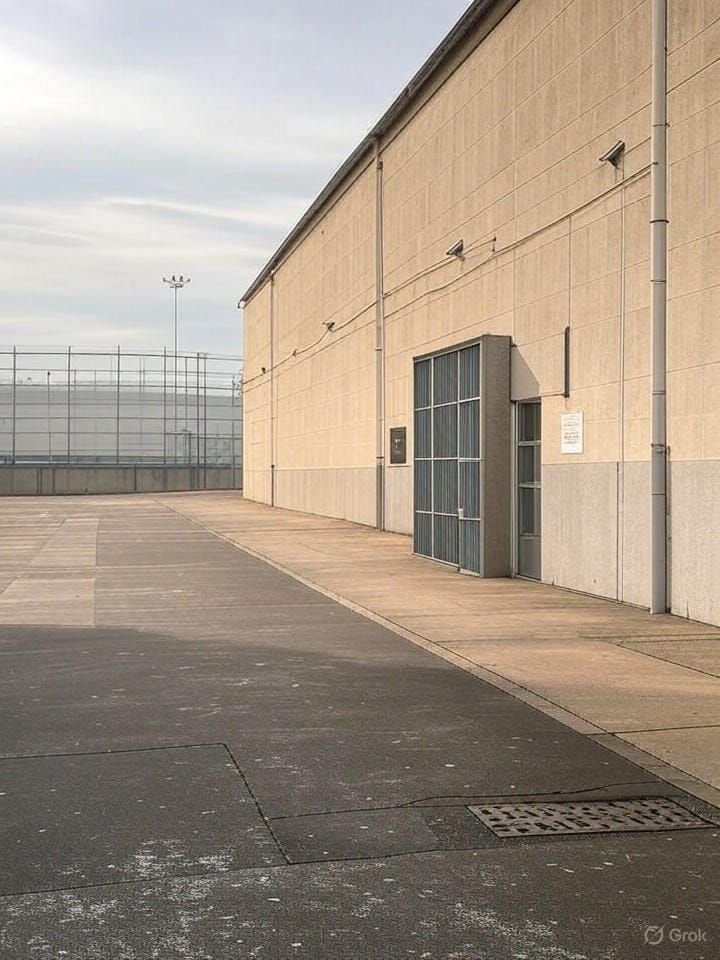
In the early 1990s I was working in Prison Service Headquarters in London. One of my tasks was to write an anti-bullying strategy for prisons in England and Wales. This was commissioned following a series of incidents of self-harm in prisons which were attributable to bullying.
As part of the project, I took a photographer to Feltham Young Offenders Institution. We simulated incidents of bullying and its aftermath – obviously with the consent of the prison governor and the inmates who agreed to take part. We included the images in the strategy document to emphasise just how terrible the experience of bullying was for those on the receiving end. My document was published in 1993 with the title Bullying in Prison: a Strategy to Beat It. This was the first anti-bullying strategy ever to be implemented in the Prison Service.
I do not know how effective the strategy was because I moved to another part of the Home Office soon afterwards. I would like to think that my recommendations improved the situation. But I was not expecting the problem to disappear. Bullying is endemic in prisons, particularly in the young offender estate. The Prison Service has revisited the strategy and updated it a number of times in the past 30 years.
The essential components of any anti-bullying strategy would include:
- Identifying behaviour that constitutes bullying.
- Assessing the risk of bullying for all inmates on reception.
- Providing clear reporting mechanisms and encouraging inmates to use them.
- Offering full support to inmates reporting bullying.
- Taking disciplinary action against inmates found to have carried out bullying.
- Appointing an anti-bullying co-ordinator among the prison staff.
- Holding regular staff meetings to review incidents of bullying and monitor the effectiveness of the strategy.
One notable absentee is urging the victims of bullying to stand up to its perpetrators. That would simply not be realistic within the confines of a prison. It would be far too dangerous for the inmates to attempt it. Anyway, prisons are supposed to be controlled environments where all problems are dealt with by the authorities rather than between the parties concerned.
International relations is an entirely different environment. Sovereign states manage their own affairs. International frameworks exist to regulate their behaviour and to manage disputes, but these do not possess the same level of authority. States sometimes ignore them and there is no obvious sanction for that. For example the International Criminal Court has stated that there is compelling evidence of genocide committed by Israel against Palestine. Yet the genocide continues, actively supported by the USA and ignored by many other states including the UK.
So in general, each state has to fend for itself. In an ideal world, relations would be characterised by negotiation, compromise, and mutual respect. In the world we actually inhabit, 'might is right' is the dominant behaviour. States which are larger, stronger, richer, more powerful, continually try to bend weaker states to their will.
This is nowhere more true than in the USA under the direction of Donald Trump. The Don is the head of what is increasingly a mafia state, seeking to impose its will by bullying and coercion. The methods range from threatening talk, to the use of tariffs as a financial weapon, to military aggression. What is the best way to deal with this?
Other things being equal (and they are not equal in the UK Prison Service), the only healthy response to bullying is to stand up to it. To their credit, a number of states have defied American attempts to bully them in the Trump 2 era:
- China matched the early American tariffs as these ratcheted up, and Trump was forced to withdraw them. Canada is now walking the same path.
- Denmark has resisted American demands to hand over Greenland. In Greenland itself, the authorities have prevented American drilling companies from an unlawful and unauthorised expansion of their activities.
- Iran responded to American military aggression by closing the Strait of Hormuz and blocking the movement of a significant proportion of the world's oil.
This comes at a cost. The smaller party is bound to suffer in the short term. (Although China is a world superpower rather than a smaller party.) But they have judged the suffering to be worthwhile in the interest of a greater goal, maintaining their own independence in the face of aggression.
As a UK citizen, I find it frustrating that the British government is not standing up to the American bully but is pursuing a policy of appeasement. That characterised the actions of the Starmer administration and looks to be doing the same for the Burnham administration. What is the point of considering drilling for oil in the North Sea, and indirectly contributing to global warming? It's only because the Don wants it to happen. And the pharmaceutical deal between the UK and the USA in 2025 will result in higher drug prices and weaker safeguards, for nothing very much in return.
The problem with giving way to bullies is that they always come back for more. Appeasement didn't work for Neville Chamberlain in the 1930s and it's not going to work for the British government now.