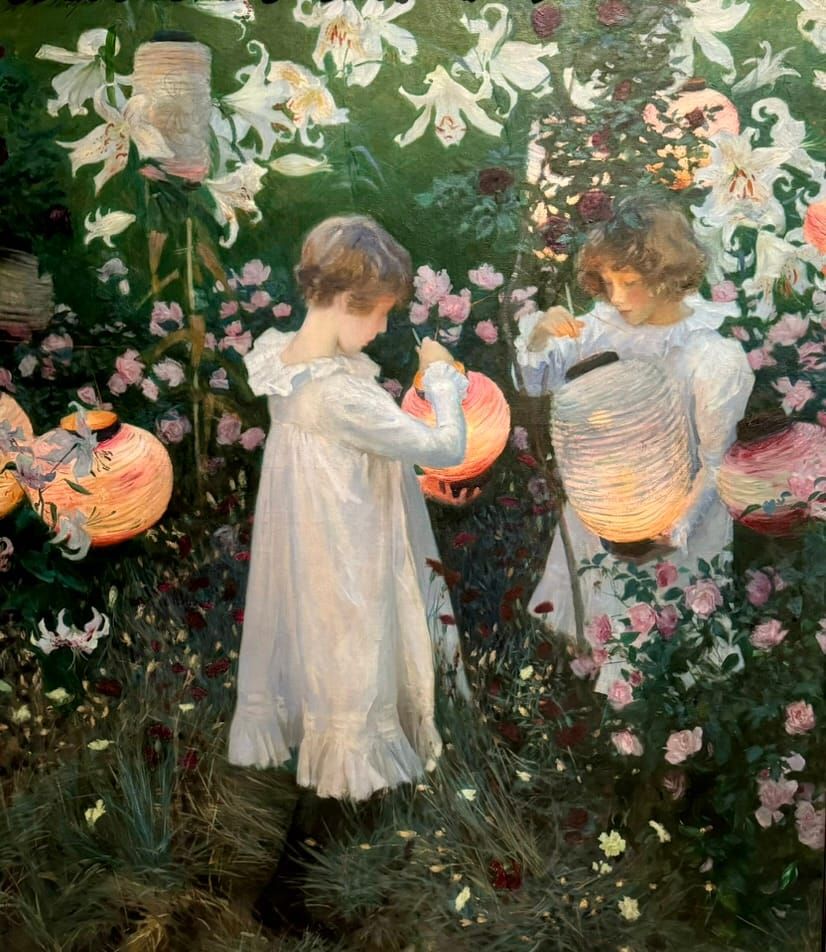
I saw the exhibition Sargent and Fashion at the Tate Britain in June 2024. This showcased many portrait paintings by the American artist John Singer Sargent in the late 19th and early 20th century. It was so interesting to see fashion used as art in this way. I saw some lovely dresses too.
The first room in the exhibition was entitled Women in Black. By the late 19th century, black had emancipated itself from its association with mourning and was increasingly worn as a fashion choice. Sargent liked to use the black on black technique where his sitters wore a jet black dress against a black background. As someone who only wore black at that stage, I had to say that this room was very me.
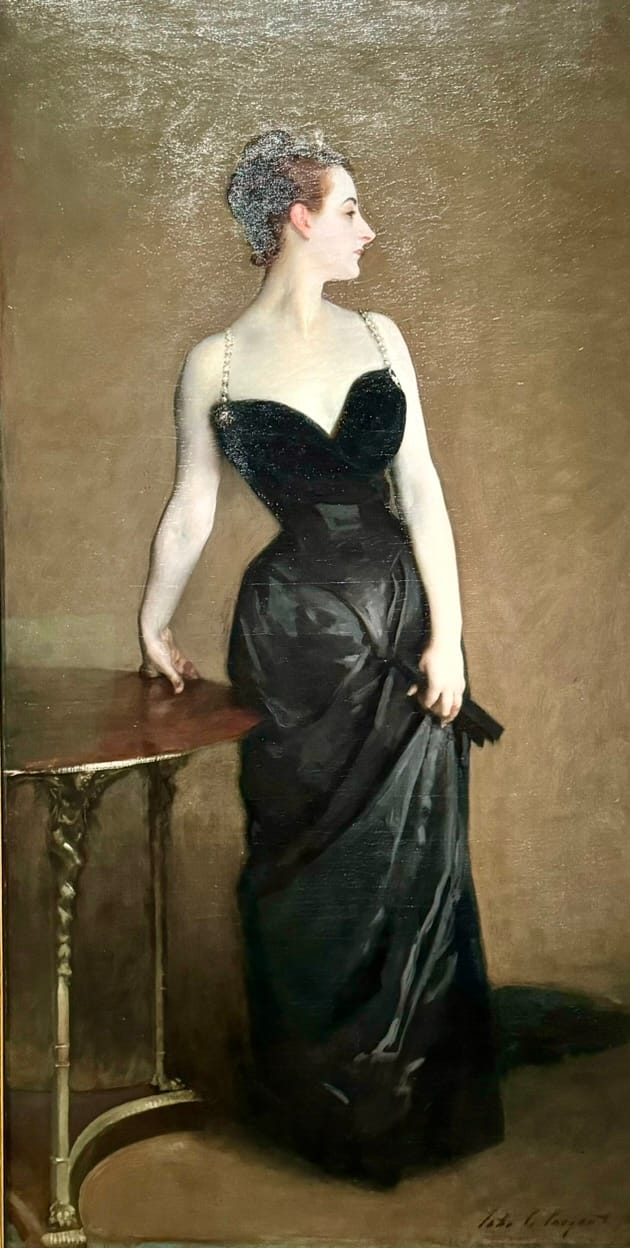
My favourite was Virginie Gautreau who looked gorgeous in a slim-waisted little black number. Unfortunately for Sargent, he got the Parisian dress code wrong and misplaced a shoulder strap in the original version of the painting. It was enough to end his Paris career and send him back to London.
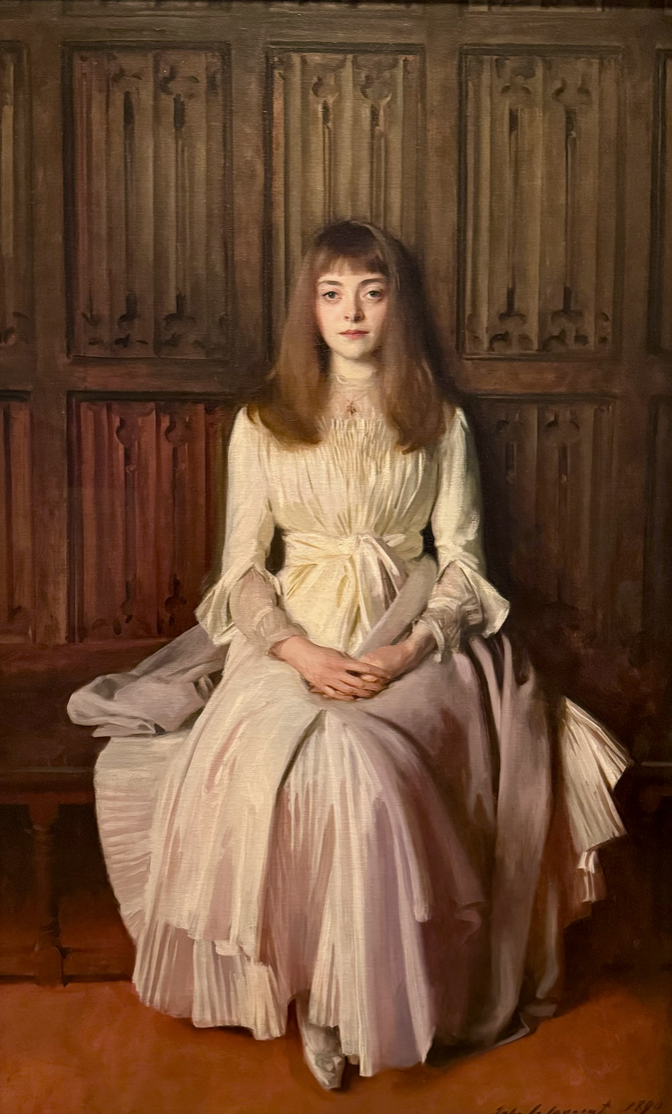
Quite a contrast after that, to see Sargent’s subjects in a more conventional white dress setting. Here the portrait of the 17-year-old Elsie Palmer was my clear favourite. I spent a long time looking at this one. I thought she was so beautiful with her calm and composed expression and her long light brown hair. The all-white setting – its emphasis on purity – opened whole new retail possibilities for me. And white is a much better choice for the summer.
Sargent did not only paint women. Some of his subjects were male. Interestingly, he did not paint them in exclusively male settings but occasionally used feminine backgrounds. One room was entitled Wonderful Possibilities and it hinted at an openness to a more complex gender-fluid approach to fashion. Although Sargent was obviously limited in what the social norms of the time allowed him to paint. It’s clear from many of the portraits that Sargent was as interested in the outfit as in the person wearing it. He would sometimes insist on a particular outfit for a portrait. At the same time, you can see how the dress and the subject complement each other. His best portraits, in my view, bring out something in the subject that gets your attention as much as the dress.
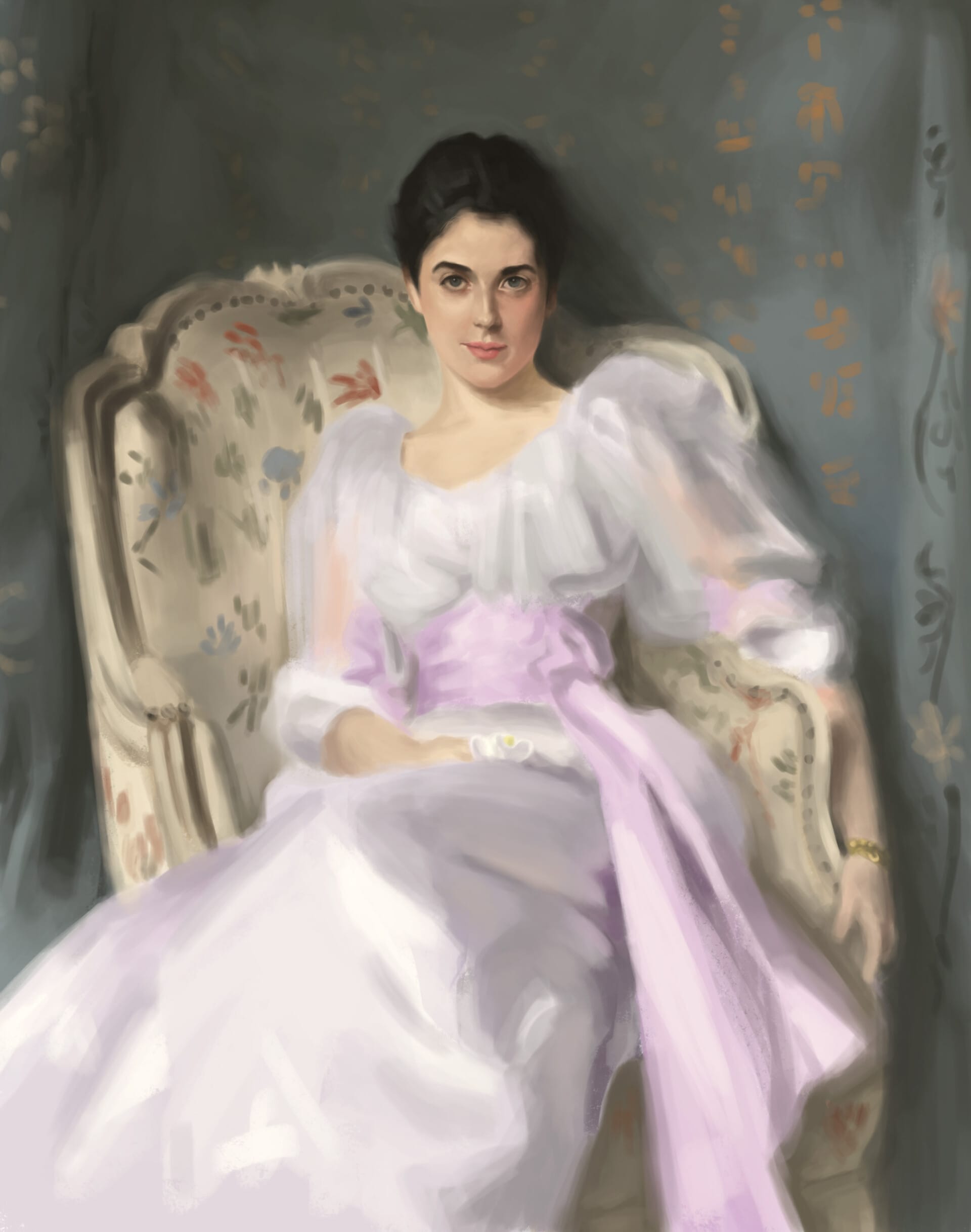
I particularly liked the portrait of Lady Agnew of Lochaw. She stares back at Sargent with her lively intelligent eyes. Another beautiful picture.
The Tate Britain was the first gallery where I took out membership and you certainly get more than you pay for.