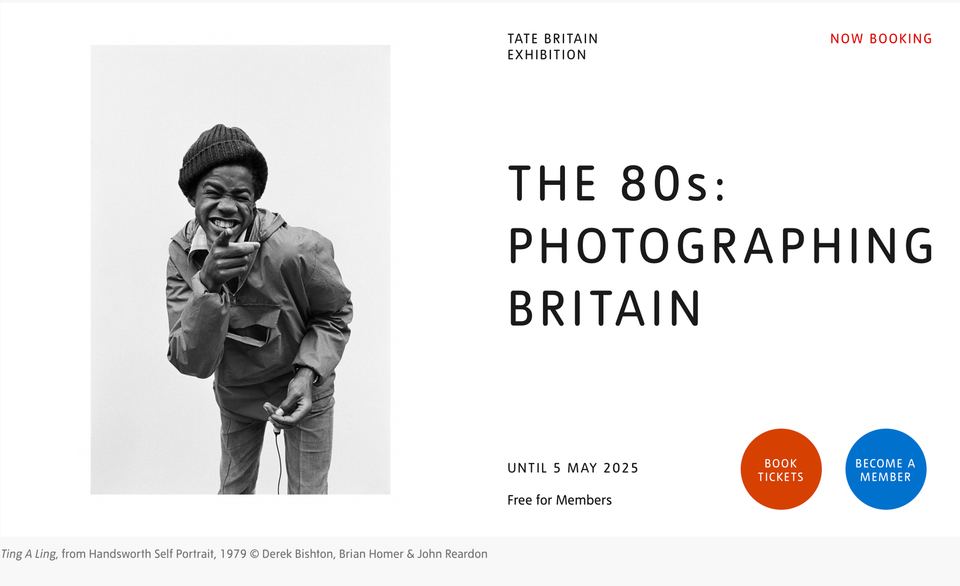
I visited The 80s: Photographing Britain at the Tate Gallery in 2025. This is how the Tate website describes the exhibition:
Explore one of the UK’s most critical decades, the 1980s. This exhibition traces the work of a diverse community of photographers, collectives and publications – creating radical responses to the turbulent Thatcher years. Set against the backdrop of race uprisings, the miner strikes, section 28, the AIDS pandemic and gentrification – be inspired by stories of protest and change.
At the time, photography was used as a tool for social change, political activism, and artistic and photographic experiments. See powerful images that gave voice and visibility to underrepresented groups in society. This includes work depicting the Black arts movement, queer experience, South Asian diaspora and the representation of women in photography.
This large collection of photographs (filling 11 rooms) was all that it promised and more. The 80s were a different world. People cared about politics and were prepared to take to the streets in numbers to express their strong views. That seems less evident these days – apart from the marches in support of Palestine, and the Extinction Rebellion climate protests. An apathy about politics seems to have set in. No doubt that suits the governing classes very well.
The other general point I took from the exhibition is that photography is subversive. It captures the reality we would rather avoid and forces us to face it.
Three photographs in particular caught my attention. They all have something in common.
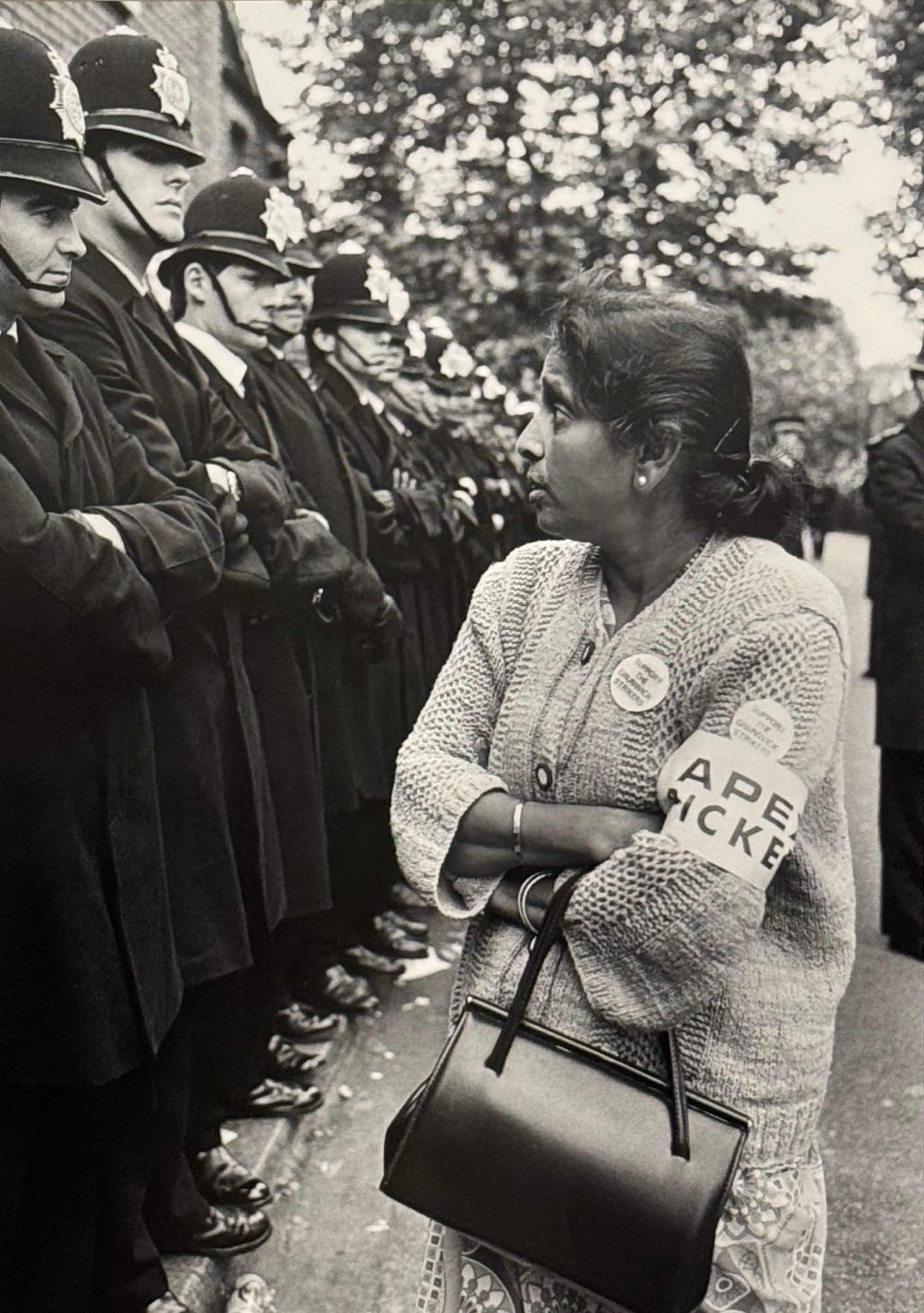
This is David Mansell’s photograph of Jayaben Desai. In 1976 she led a walk-out from a London film processing laboratory as part of a campaign for union recognition for the workers (mainly women from South Asia). Although ultimately unsuccessful, their fight brought out thousands more who marched in solidarity. In this picture she faces a row of policemen and gives them a long hard stare.
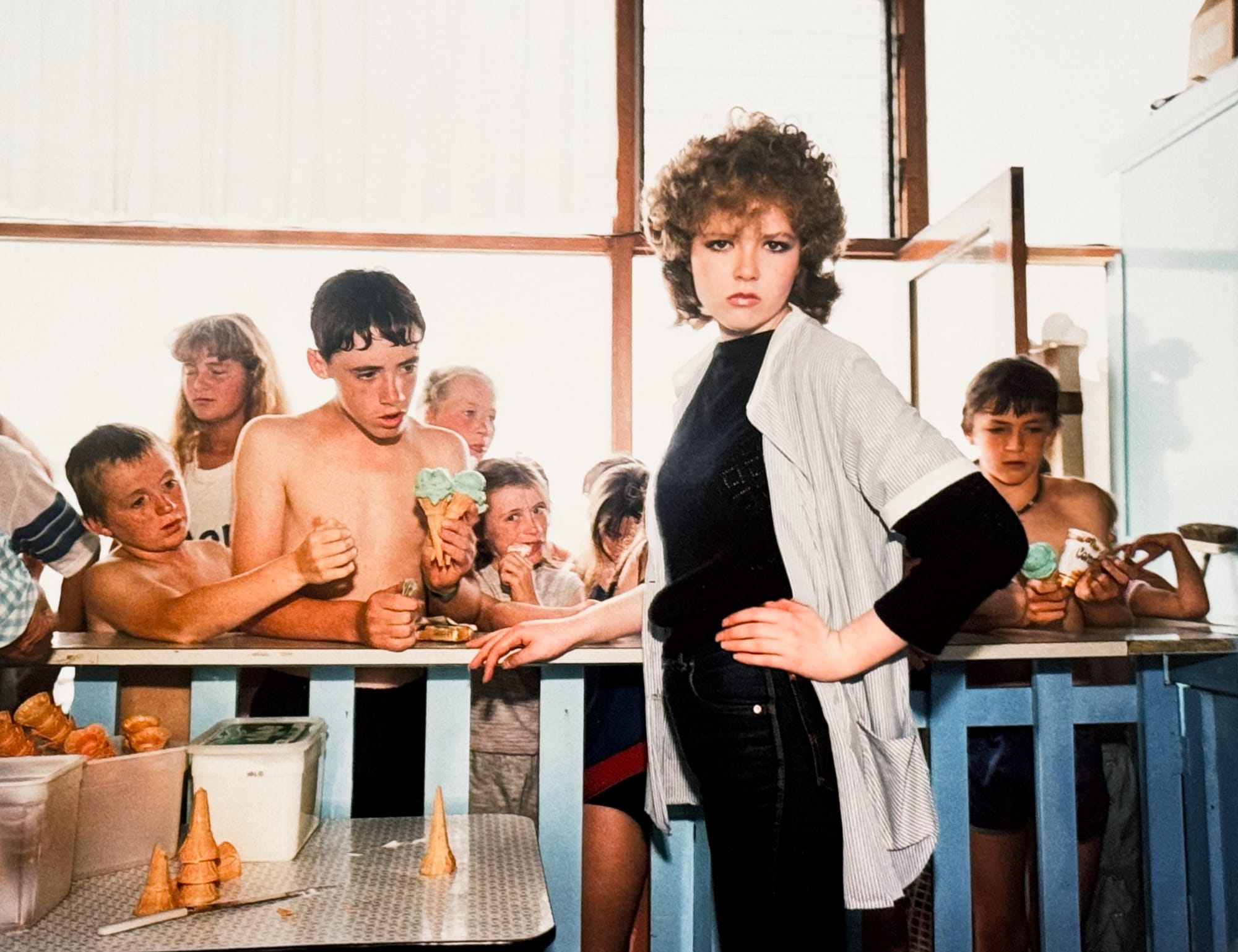
Martin Parr took a series of photographs entitled The Last Resort, depicting life in the Merseyside seaside resort of New Brighton. This picture is set in an ice-cream parlour. The children are all focused on the ice cream, but the central figure is the woman behind the counter, the only one directly facing the camera, who is expressionless.
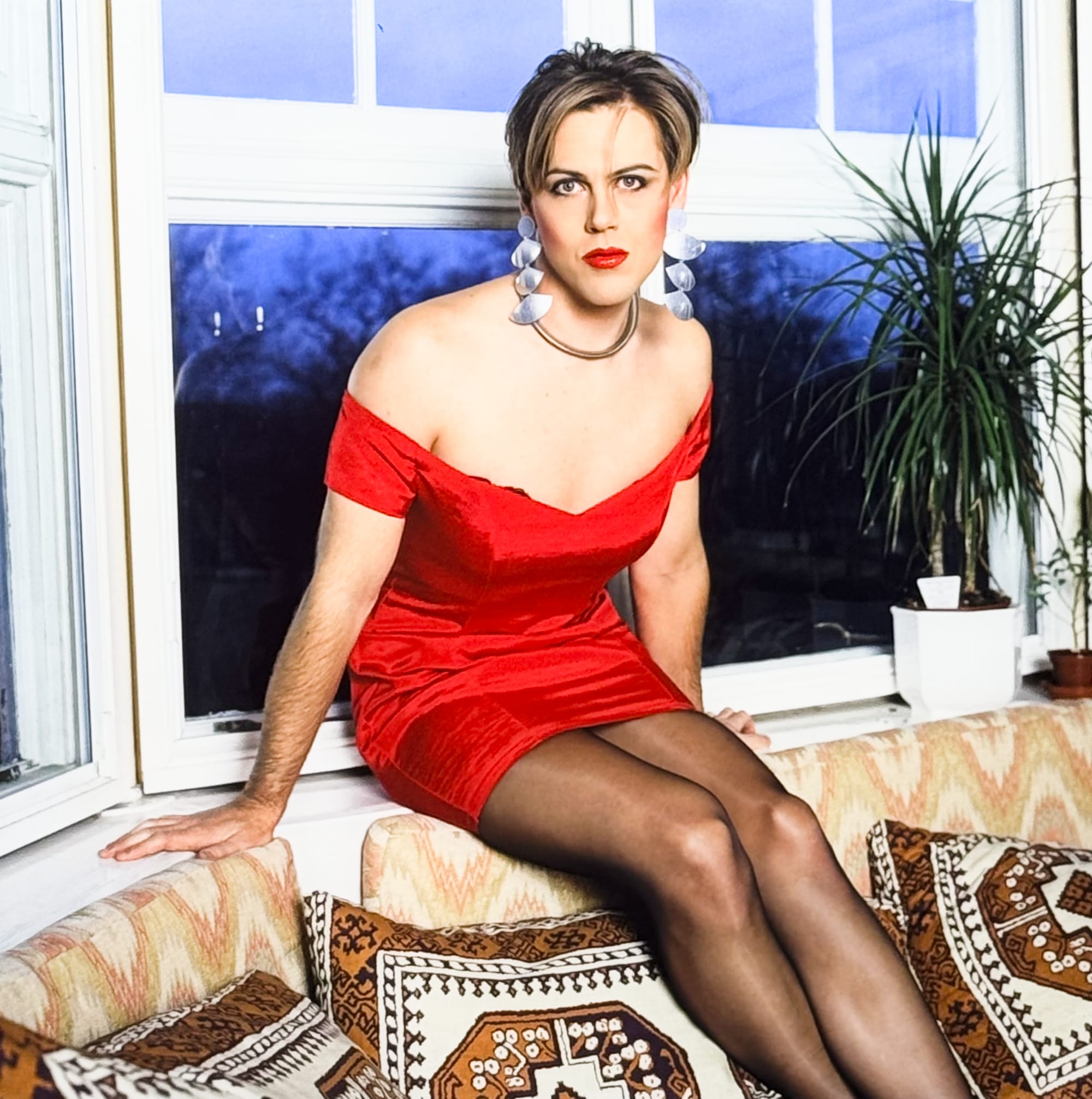
Grace Lau is represented by a series of pictures, exploring fetish sub-culture from a feminist perspective. The subjects of this series are members of a London cross-dressing community. She describes them as vibrant, using bright colours to reflect their multi-layered personalities. In this one, the subject is beautifully made up. I wish my make up was that good. I love the dress too. Interesting that she has made no attempt to remove or hide the bodily hair on her arms – almost as if she wants the viewer to know that she has stepped from one identity into another.
All these women are defiant and self-possessed. They are at home in their identity and world view. They are concentrating fully on the matter in hand. I identified with them so much.